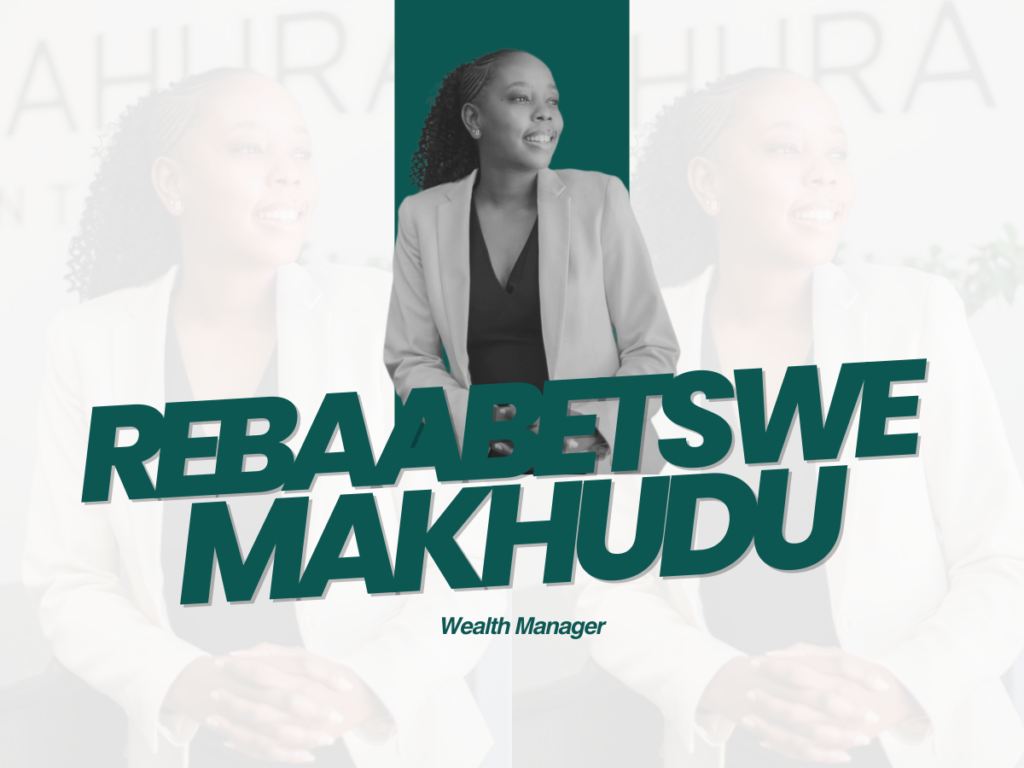
For Rebaabetswe “Reba” Makhudu, building wealth is not about chasing trends or copying what others are doing. It is about taking control of your future. That belief sits at the centre of how she approaches investing, financial planning, and education—especially for young professionals who feel overwhelmed by money conversations.
As a Certified Financial Planner and wealth manager, Reba works with people across income levels, life stages and financial realities. What she sees repeatedly is not a lack of money, but a lack of clarity. People want to invest, but they don’t always understand why, how, or where to start.
And that’s where most mistakes happen.
Why Investing Is Not the First Step
One of the most important lessons Reba shares—often to the surprise of clients—is that investing is not always the starting point. Many people want to jump straight into investments without fixing their foundation.
Before any money is invested, Reba looks at the basics: income, expenses, debt and cash flow. If someone is living month to month, heavily indebted, or relying on credit for survival, investing too early can do more harm than good.
Her approach is simple and practical: create surplus before you create wealth. That surplus becomes the fuel for every future financial goal.
The Role of an Emergency Fund
If there is one non-negotiable in Reba’s financial philosophy, it is an emergency fund. She recommends having at least six months’ worth of income saved in an accessible emergency account before serious investing begins.
Without this buffer, any unexpected expense—a medical emergency, car trouble, job loss—often pushes people into debt. An emergency fund allows you to “borrow from yourself” instead of from a bank charging interest.
Too many people treat credit cards as emergency savings. While credit can play a role, relying on it consistently is risky and expensive. Emergency savings create stability, and stability creates room for long-term growth.
Why Purpose Matters More Than Products
One of the biggest mistakes first-time investors make is choosing products without understanding their purpose. Reba often sees people opening accounts because of adverts, social media trends or advice from friends—without knowing what the money is actually for.
Investing without purpose leads to frustration, poor decisions and unrealistic expectations.
Every recommendation Reba makes starts with questions:
- What are you investing for?
- Is this money needed in one year, five years, or twenty?
- What type of investor are you, and what’s your risk tolerance?
The answers to these questions determine whether money should be saved or invested, and which products are suitable.
Tax-Free Savings Accounts: A Smart Starting Point
For young professionals starting their wealth journey, Reba often highlights the power of a tax-free savings account (TFSA). The biggest advantage is simple but powerful: all growth is tax-free.
Interest, dividends and capital gains earned within a TFSA belong fully to the investor. Over time, this makes a significant difference, especially when investments are left untouched for long periods.
Equally important is accessibility. Many institutions offer low minimum contributions, making TFSAs ideal for building the habit of investing consistently—even with small amounts.
Understanding Unit Trusts and Investment Choices
When it comes to products like unit trusts, Reba does not believe in “do-it-yourself” investing without understanding. Education comes first. Clients are guided through what unit trusts are, how they work, and what type of investor they are—conservative, moderate or aggressive.
Only then does she make recommendations, comparing different providers and portfolios. Investing is never about picking the “best-performing” fund—it is about choosing the right fund for the right person at the right time.
Short-Term Saving vs Long-Term Investing
Another area of confusion Reba often clears up is the difference between saving and investing. If money is needed within a year or two—for a car, a wedding or a home deposit—that money should generally be saved, not invested.
Investing is designed for the long term. Time allows markets to recover from volatility and for compounding to do its work. Even five years can be considered long-term in some cases, but investing requires patience and discipline.
Understanding this difference protects people from unnecessary disappointment and risk.
The Power of Starting Early
Across income levels, Reba notices a clear pattern: people who start early gain confidence faster. They avoid bad debt, understand their financial plans better, and become more intentional with money decisions.
Starting early doesn’t mean earning more—it means starting with what you have. Over time, compounding rewards consistency more than perfection.
These individuals often become sources of knowledge in their families and communities, passing on what they’ve learned and strengthening their own habits in the process.
Social Media vs Professional Advice
With financial content flooding platforms like TikTok and Instagram, Reba encourages a balanced approach. Social media can spark curiosity and motivation—but it should never replace professional advice.
Not all advice online is regulated, accurate or suitable. Reba urges young people to verify sources, check credentials, and consult licensed professionals before acting. Financial decisions have long-term consequences, and hype-driven advice can be costly.
Education should empower, not mislead.
From Budgeting to Wealth-Building
Helping clients move from surviving to planning is one of the most rewarding parts of Reba’s work. It starts with honest budgeting—line by line—separating needs from wants and identifying opportunities to create surplus.
Once stability is achieved, financial planning expands into risk management: life cover, disability protection and critical illness cover. Wealth-building is not only about growth, but also about protection.
Investing then becomes part of a broader, holistic plan rather than a standalone action.
If South Africans Learned One Thing About Money
If Reba could teach every South African one lesson about money, it would be this: understand the basics. Know what comes in, what goes out, and whether you are living within your means.
Wealth does not begin with complex strategies—it begins with awareness.
Investing as a Lifelong Journey
At its core, Reba believes financial planning is not a once-off event. It is a lifelong relationship that evolves as life changes—marriage, children, career shifts, losses and opportunities.
Investing is not about perfection. It is about intention, patience and consistency.
And most importantly, it is about taking ownership of your future—one informed decision at a time.

